

Safeguarding Your Financial Future: A Comprehensive Guide to Choosing the Right Insurance Limits
In the complex ecosystem of financial planning, insurance often sits alongside banking and investments as a primary pillar of stability. Yet, while many individuals spend hours researching the right stocks or the best high-yield savings accounts, they frequently treat insurance limits as an afterthought—often opting for the “standard” or “minimum” amounts suggested by a quick online quote.
As a senior financial advisor with decades of experience across banking, insurance, and wealth management, I have seen firsthand that an insurance policy is only as good as its limits. Choosing the wrong limit isn’t just a minor administrative error; it is a fundamental flaw in your risk management strategy that can expose your entire net worth to catastrophic loss.
This guide explores the strategic process of determining the right insurance limits for your personal and professional life, ensuring your “financial moat” is deep enough to withstand the unexpected.
1. Understanding the Core Concept: What Are Limits?
At its simplest, an insurance limit is the maximum amount an insurance company will pay for a covered loss. Once that limit is reached, the “buck stops” with you. Any remaining costs—whether they are medical bills for a third party, legal fees, or property repair costs—must come out of your pocket, your savings, or your future earnings.
In most policies, you will encounter two primary types of limits:
- Per Occurrence Limit: The maximum amount paid for a single accident or event.
- Aggregate Limit: The maximum amount the policy will pay during the entire policy term (usually one year).
2. Personal Lines: Protecting Your Lifestyle
Auto Insurance: The Risk of the “Minimum”
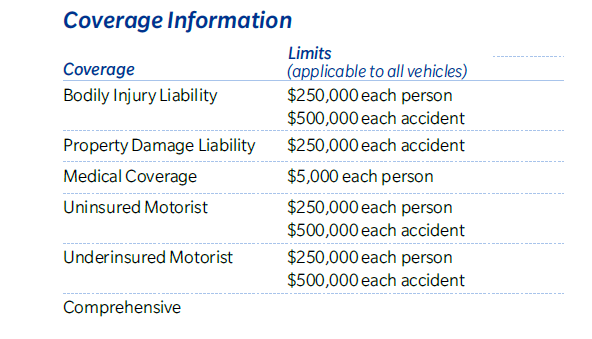
Most states mandate minimum liability limits, such as 25/50/25 ($25,000 per person for bodily injury, $50,000 per accident, and $25,000 for property damage). In 2026, these figures are dangerously inadequate.
Consider a scenario where you are at fault in an accident involving a luxury electric vehicle and two passengers who require surgery. Between the vehicle replacement cost (often exceeding $70,000) and medical bills, a “minimum” policy would be exhausted in minutes, leaving you personally liable for the remaining hundreds of thousands of dollars.
The Rule of Thumb: Your liability limits should, at a minimum, match your total net worth. If you have $500,000 in assets (home equity, savings, and investments), your liability limits should be at least $500,000.
Homeowners Insurance: Beyond the Mortgage
When choosing limits for your home, many people focus on their mortgage balance or the market value of the home. Both are incorrect metrics.
- Dwelling Limit (Coverage A): This must be based on the replacement cost—the actual cost to rebuild your home from the ground up at current labor and material prices. With global supply chain fluctuations and rising construction costs, ensuring you have “Extended Replacement Cost” coverage is vital.
- Personal Liability: Like auto insurance, this protects you if someone is injured on your property. In an era of increasing litigation, $300,000 is often considered the baseline, though $500,000 is preferred for most homeowners.
3. Commercial Lines: Protecting Your Business
For business owners, insurance limits are not just about protection; they are often a prerequisite for doing business.
- Contractual Requirements: Many clients or landlords will require you to carry at least $1,000,000 or $2,000,000 in General Liability.
- Professional Liability (E&O): If you provide advice or services (like accounting or consulting), your limits should reflect the scale of the financial harm a mistake could cause your largest client. If a $50,000 error could cascade into a $2,000,000 loss for your client, a $1,000,000 limit is insufficient.
- Cyber Liability: This is the fastest-growing risk sector. When choosing limits here, consider the cost of data recovery, legal notifications, and regulatory fines. For small to mid-sized businesses, $1M is the standard starting point.
4. The “Safety Net”: Umbrella and Excess Liability
If you find that your primary policies (Auto, Home, or General Liability) cannot offer high enough limits, or if the cost becomes prohibitive, an Umbrella Policy is the solution.
Umbrella insurance sits on top of your other policies. If you have a $500,000 limit on your auto insurance and a $1,000,000 Umbrella policy, you effectively have $1.5 million in protection.
From a wealth management perspective, Umbrella insurance is one of the most cost-effective ways to protect your assets. A $1 million umbrella policy often costs less than $300–$500 per year—a small price to pay to ensure a single lawsuit doesn’t liquidate your retirement accounts.
5. Factors Influencing Your Decision
How do you calculate the “perfect” number? It requires a blend of quantitative and qualitative analysis:
- Net Worth and Asset Exposure: Audit your balance sheet. Include home equity, non-qualified investment accounts, and luxury goods. (Note: In many states, qualified retirement plans like 401(k)s have some protection from creditors, but this varies by jurisdiction.)
- Future Earnings: Liability isn’t just about what you have now; it’s about what you will earn. In some cases, a court can garnish future wages to settle a judgment. If you are a high-earning professional (doctor, lawyer, executive), you are a “target” for higher settlements.
- Risk Profile: Do you have a swimming pool? A dog? A teenage driver? Do you host frequent parties? Do you serve on a non-profit board? Each “risk multiplier” necessitates higher limits.
- The “Nuclear Verdict” Trend: We are seeing an increase in “nuclear verdicts”—jury awards exceeding $10 million. While rare, they are becoming more common in personal injury cases. If you live in a highly litigious area, higher limits are a necessity.
6. The Role of Technology and InsurTech
In today’s digital landscape, we have access to better data than ever before. Many Fintech and InsurTech platforms now offer “Risk Benchmarking.” These tools allow you to see what other individuals or businesses in your specific demographic or industry are choosing for their limits.
While benchmarking is helpful, remember that your financial situation is unique. Use data as a starting point, but tailor the final limits to your specific risk tolerance and asset structure.
7. Common Pitfalls to Avoid
- Setting and Forgetting: Your insurance limits should be reviewed annually. As your home appreciates and your investment portfolio grows, your 2022 limits may be woefully inadequate for 2026.
- Ignoring Sub-limits: Many policies have “internal” limits. For example, a homeowners policy might have a $500,000 dwelling limit but only a $1,500 limit for jewelry or $2,500 for silverware. If you have high-value items, you need “scheduled” coverage or floaters.
- Choosing Based on Premium Alone: A lower premium usually means lower limits or higher deductibles. In the insurance world, you often get exactly what you pay for. Cutting $20 a month off your premium by lowering your liability from $500k to $100k is a poor “return on investment.”
Conclusion: A Strategic Mindset
Choosing the right insurance limits is an exercise in honesty and foresight. It requires you to look at your financial life and ask, “What is the worst that could happen, and am I prepared to pay for it?”
Insurance should never be viewed in a vacuum. It is a tool to protect your banking deposits, your real estate equity, and your investment growth. When your insurance limits are aligned with your net worth and your risk profile, you gain something far more valuable than a policy document: financial peace of mind.
If you haven’t reviewed your declarations page in the last twelve months, now is the time. Consult with your advisor, audit your assets, and ensure that your limits are built for the reality of today’s economic and legal landscape.
Disclaimer: This article is for informational purposes only and does not constitute legal, financial, or insurance advice. Always consult with a licensed insurance professional or financial advisor to discuss your specific needs.