

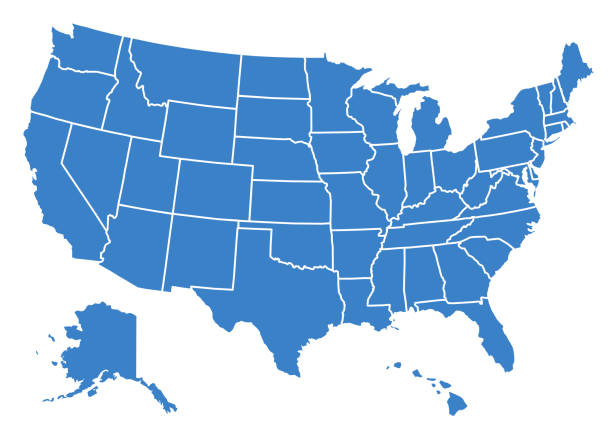
The Great American Patchwork: Why Insurance Varies Across State Lines
If you have ever moved from one state to another, you likely experienced a moment of “sticker shock” when updating your insurance policies. A driver moving from rural Ohio to south Florida might see their auto premium double, while a homeowner moving from California to North Carolina might find themselves navigating an entirely different set of mandates for fire and wind coverage.
In the United States, insurance is not a monolith. Unlike banking, which is largely governed by federal oversight through agencies like the OCC or the Federal Reserve, insurance is a “patchwork” industry. This decentralization is a deliberate feature of the American economic and legal landscape, rooted in history, geography, and the unique socio-economic needs of different populations.
As a Senior Financial Services Advisor, I often explain to clients that there are five primary drivers behind this interstate variation: the legal foundation of regulation, geographic risk profiles, state-specific legal systems, economic demographics, and the individual philosophies of state insurance departments.
1. The Legal Foundation: The McCarran-Ferguson Act of 1945
To understand why insurance is different in every state, one must first look at the law. For much of early American history, it was unclear whether the federal government or the states had the authority to regulate insurance. In 1944, the Supreme Court ruled that insurance was interstate commerce and thus subject to federal regulation. However, the industry and state governments pushed back, leading to the McCarran-Ferguson Act of 1945.
This landmark federal law explicitly delegated the authority to regulate and tax the business of insurance to the individual states. The rationale was that insurance is a “local” product; the risks faced by a farmer in Iowa are fundamentally different from those faced by a high-rise owner in Manhattan. By keeping regulation at the state level, the system ensures that local authorities—who are theoretically more attuned to the specific needs of their constituents—are the ones setting the rules.
2. Geographic and Environmental Risk Profiles
The most visible reason for price and coverage differences is geography. Insurance is, at its core, the pricing of risk. Because risks are not distributed equally across the continent, insurance products must adapt.
- Florida and the Gulf Coast: Here, the primary concern is windstorm and hurricane damage. Because of the massive potential for catastrophic loss, these states often have specific “windstorm deductibles” and state-backed “insurers of last resort” (like Florida’s Citizens Property Insurance Corporation) that don’t exist elsewhere.
- California and the West: Wildfire and earthquake risks dominate the conversation. California’s FAIR Plan and the California Earthquake Authority are unique entities designed to address risks that private carriers might otherwise find uninsurable.
- The Midwest: In states like Texas, Oklahoma, and Kansas, hail and tornadoes are the primary drivers of property insurance costs. A roof that might last 30 years in Arizona might only last seven in North Texas.
Because the physical environment varies so drastically, a “standard” national policy would be inefficient—either overcharging those in low-risk areas or under-insuring those in high-risk zones.
3. Legal Environments: Tort vs. No-Fault
The legal system of a state dictates how claims are paid, which is a massive factor in insurance pricing. This is most evident in auto insurance.
The U.S. is divided into “Tort” (At-Fault) and “No-Fault” states. In a Tort state (like Texas or California), the person who caused the accident is responsible for the damages. This often leads to litigation to determine fault. In a No-Fault state (like Michigan, New Jersey, or Florida), each driver’s own insurance pays for their medical bills regardless of who caused the accident, usually through Personal Injury Protection (PIP).
The “No-Fault” system was designed to reduce litigation and speed up payments, but in practice, it often leads to higher premiums due to high mandatory medical benefit levels and, in some cases, increased fraud. Furthermore, states have different “statutes of limitations” and “comparative negligence” laws, which determine how much a person can recover if they were partially at fault for an accident.
4. Mandatory Coverage and Minimum Limits
Every state legislature has the power to decide the minimum amount of insurance its citizens must carry.
- Auto Insurance: Some states require only $15,000 in bodily injury liability, while others require $50,000. Some require Uninsured Motorist coverage; others make it optional.
- Workers’ Compensation: The benefits paid to an injured worker vary wildly. A lost thumb in one state might result in a significantly different settlement amount than in a neighboring state, based on the state’s “Schedule of Benefits.”
- Health Insurance Mandates: While the Affordable Care Act (ACA) created a federal floor, states can add their own mandates. For example, some states require all insurance plans to cover fertility treatments, while others do not. Every added mandate increases the premium for consumers in that state.
5. The Role of the State Insurance Commissioner
Each state has an Insurance Commissioner (either elected or appointed) who heads a Department of Insurance (DOI). These departments serve as the “referees” of the industry. They have two primary jobs: ensuring that insurance companies remain solvent (so they can actually pay claims) and ensuring that rates are not “excessive, inadequate, or unfairly discriminatory.”
The regulatory philosophy of these departments varies:
- Prior Approval States: In states like California, insurance companies must get explicit permission from the DOI before they can change their rates. This often keeps rates lower in the short term but can lead to “insurance deserts” if companies decide they can’t make a profit and stop writing policies in the state.
- File-and-Use States: In more market-oriented states, companies can change their rates first and notify the regulator later. This typically leads to a more competitive market with more choices for consumers, though prices may fluctuate more frequently.
6. Economic and Demographic Factors
Finally, the cost of living and local economic conditions play a role. Insurance pays for things that have costs: labor for car repairs, hospital stays, and litigation.
- Medical Costs: The cost of an MRI or a day in the ICU is significantly higher in San Francisco than in Mobile, Alabama. Therefore, health and liability insurance must be priced accordingly.
- Labor Rates: If a body shop in New York City charges $120 an hour for labor, but a shop in rural Tennessee charges $60, the physical damage portion of an auto policy will be more expensive in New York.
- Population Density: Higher density usually means more accidents, more theft, and more opportunities for litigation, all of which drive up premiums.
The Strategic Implication: Why It Matters to You
The diversity of the insurance market is both a challenge and a safeguard. While it can be frustrating to navigate the complexity of state-specific rules, the system allows for regional stability. If a massive hurricane hits Florida, it may cause rates to rise in the Southeast, but it won’t necessarily bankrupt a small mutual insurer in Oregon that only covers local farms.
For professionals and consumers alike, the key takeaway is that insurance is local. You cannot assume that the coverage you had in one state is sufficient—or even available—in another.
When navigating these differences, I always recommend working with an independent advisor who understands the nuances of your specific state’s statutes. Whether you are managing personal risk or overseeing a multi-state business enterprise, understanding the “why” behind these differences is the first step in ensuring you are neither over-paying nor under-insured. The “Great American Patchwork” may be complex, but it is designed to reflect the diverse reality of the country we live in.